Education Fair Checklist: From 12 Weeks Out to the Week After
By mapmyfair team · · 4 min read
Most of the things that go wrong at an education fair were decided weeks earlier. The hall with eight plug points for forty stalls. The banner that went to print with last year's date. The university that paid but never got its agreement, and turned up asking which stall was theirs. None of it happens on the day. It happens in week nine, when nobody was looking.
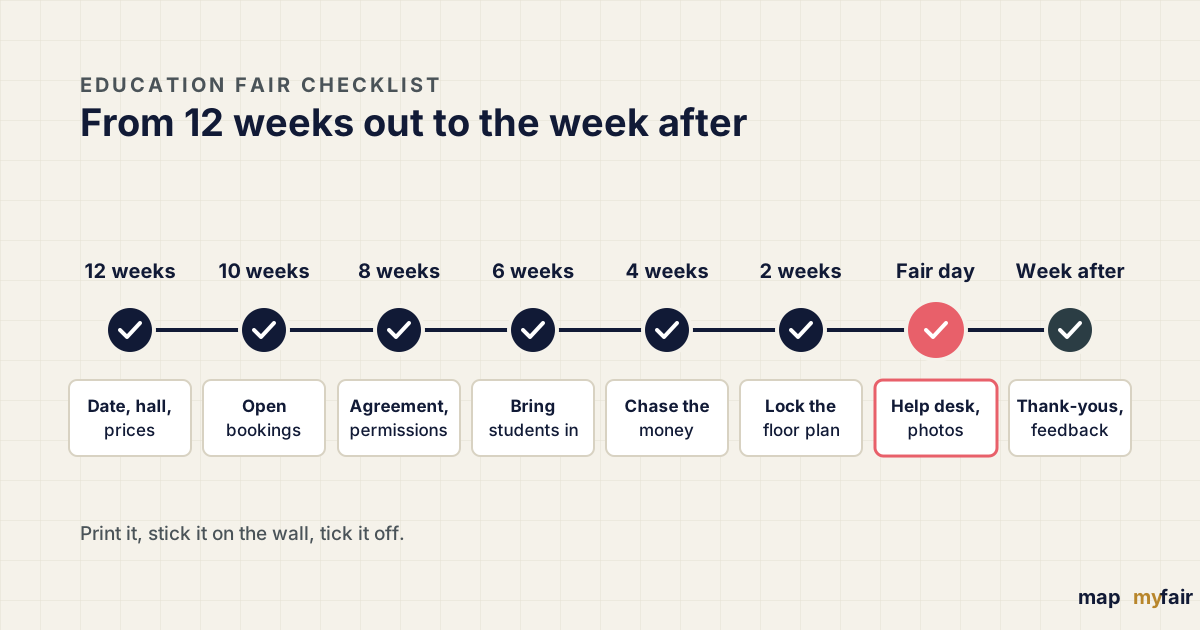
So here's the whole thing laid out by week, from three months before the fair to the week after. Print it, stick it on the wall, tick things off. If a step doesn't apply to your fair, cross it out and move on. If you want the reasoning behind each step, our guide to organising an education fair goes through it in detail.
12 weeks out: the decisions everything else hangs on
Get these wrong and no amount of hard work later fixes them.
- Fix the date, after checking exams, festivals and other fairs in your city that weekend.
- Book the hall and pay the advance. Get the setup evening in writing if you need it.
- Walk the hall: measure it, count the power points, find the entrance students will use.
- Make a budget, with a line for things you haven't thought of yet.
- Decide what one stall includes, your categories and your prices.
10 weeks out: open bookings
You can't sell stalls until institutions can see them. Draw the floor plan, number the stalls (B01, B02 and so on are fine) and put up a booking page with the date, the venue, the categories and the prices. Then send the link to every institution on your list, with a personal message to the ten you most want. An early-booking price that ends in four weeks gives them a reason not to sit on it.
8 weeks out: paperwork and permissions
The boring week. Do it anyway.
- Prepare the agreement institutions sign, with your cancellation and refund rules in it.
- Check your invoice details: your organization's name, address, GST number, and whether prices include GST.
- Ask the venue which permissions and approvals it needs from you for an event your size, and start them.
- Book the furniture and power vendor, if the venue doesn't supply them.
6 weeks out: start bringing students in
This is earlier than most organizers start, and it's why their halls are half-empty at 3 PM. Write to the principals of nearby schools and junior colleges. Ask for a few minutes in their assembly, and leave posters for the notice board. Start posting on Instagram, ideally short videos from your last fair. Set up a free registration form that asks for a name and a phone number, and nothing else.
4 weeks out: chase the money
- List every institution that has asked for a stall but hasn't paid, and follow up with each.
- Release stalls held by people who've gone quiet. Someone else will take them.
- Confirm every payment against your bank statement, not against a screenshot.
- Make sure every paid institution has its agreement and its invoice.
If your bookings live on WhatsApp and a spreadsheet, this is the week you'll feel it. It's also the week that persuades most organizers to put bookings in one place. (That's what we built mapmyfair for.)
2 weeks out: lock the floor
- Freeze the floor plan. Late changes now confuse everyone.
- Send the printer the stall numbers, the entrance floor plan and the banners. Check the dates on them twice.
- Plan the seminar timings, if you're running any, and tell the speakers.
- Brief your volunteers: who stands where, who handles the help desk.
The last week
Send every exhibitor a short note: their stall number, the time the hall opens for setup, parking, who to call on the day. Ring the ones who haven't replied. Confirm the furniture, the power and the food with the vendors. Post a countdown for students. The evening before, set up the hall and walk it once as a student would, from the entrance to the back corner.
On the day
- Open the hall to exhibitors at least two hours before the students.
- Keep the help desk staffed all day, with the exhibitor list, extension boards and tape.
- Count visitors, even roughly. Exhibitors will ask.
- Take photos of every stall. You'll need them in a week.
The week after
Thank every institution, with a photo of their stall and the visitor count. Settle the money: balances still due, invoices that need correcting, refunds you promised. Then ask each exhibitor what worked and what didn't, while they still remember. Those answers, and those photos, are how next year's fair gets sold.
Still setting prices? Our piece on pricing and selling stalls works through the numbers.
Frequently asked questions
How far ahead should I plan an education fair?
About twelve weeks for a fair of thirty or more stalls. You need the first month for the date, hall and prices, and the rest for selling stalls, paperwork and bringing students in. Small fairs at a venue you know can be done in six to eight weeks.
When should I start inviting students?
Around six weeks before the fair. Schools and junior colleges need time to fit you into an assembly or put up a poster, and students decide their weekend plans well before the weekend.
What should I send exhibitors before the fair?
A short note in the last week with their stall number, when the hall opens for setup, where to park and who to call on the day. Most of the questions you'd otherwise get on the morning of the fair are answered by that one message.
Read next
- How to Organise an Education Fair: A Practical Guide for OrganizersPicking the date and hall, inviting institutions, pricing stalls, handling bookings and payments, and bringing students in: an education fair, step by step.
- How to Price and Sell Stalls at an Education FairWorking out your break-even stall price, Premium and Standard categories, what a stall includes, holding stalls, deposits and cancellations, with a worked example.